British Columbia driving rarely stays on one kind of surface. A weekend can start on the highway, move to a gravel forestry road, and end on a rutted trailhead. The F-150 Tremor is built to handle exactly that mix, with everyday manners and trail-ready hardware in one package.
Both trims share the F-150’s frame and cab, but they are built around different priorities. One favours everyday usability with real trail manners. The other leans hard into speed and clearance on rough terrain.
Tremor Vs Raptor: Side-By-Side
|
Spec
|
F-150 Tremor
|
F-150 Raptor
|
|
Max towing
|
10,600 lbs (4,808 kg)
|
8,200 lbs (3,719 kg)
|
|
Combined fuel economy
|
13.3 L/100km
|
15.8 L/100km
|
|
Engine
|
3.5L EcoBoost V6, 400 hp, 500 lb-ft
|
High-Output 3.5L EcoBoost V6, 450 hp, 510 lb-ft
|
|
Recommended fuel
|
Regular unleaded
|
Premium unleaded
|
|
Departure angle
|
24.3°
|
23.9°
|
|
Approach angle
|
27.6°
|
31.0°
|
|
Ground clearance
|
240 mm
|
306 mm
|
|
Width (excl. mirrors)
|
2,030 mm
|
2,200 mm
|
The Tremor pulls ahead on towing and fuel economy, two numbers that matter every week, not just on trail days. The Raptor’s wider stance and taller clearance show up where the numbers favour it: steep approach angles and high-speed terrain.
Off-Road Hardware and Terrain Fit
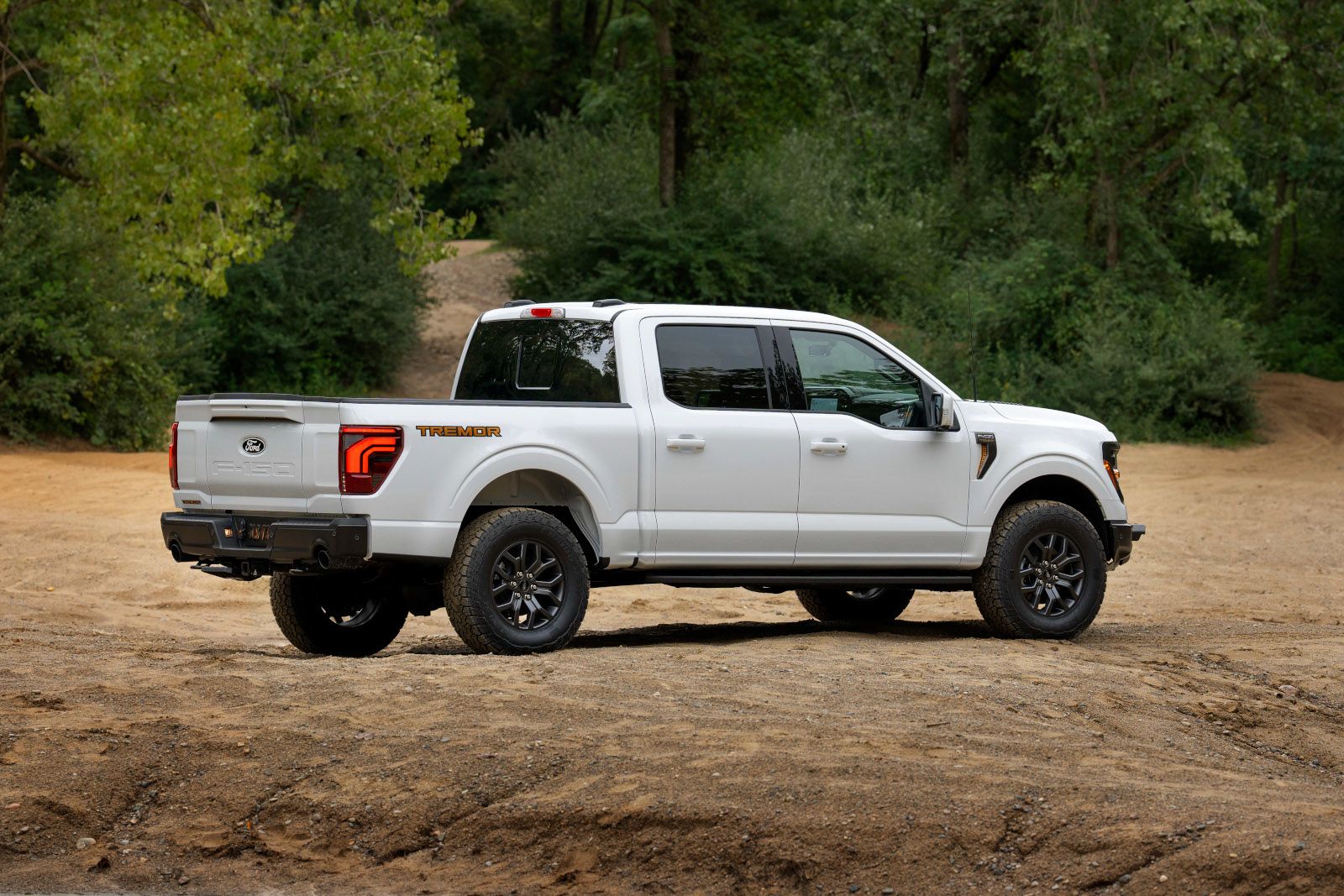
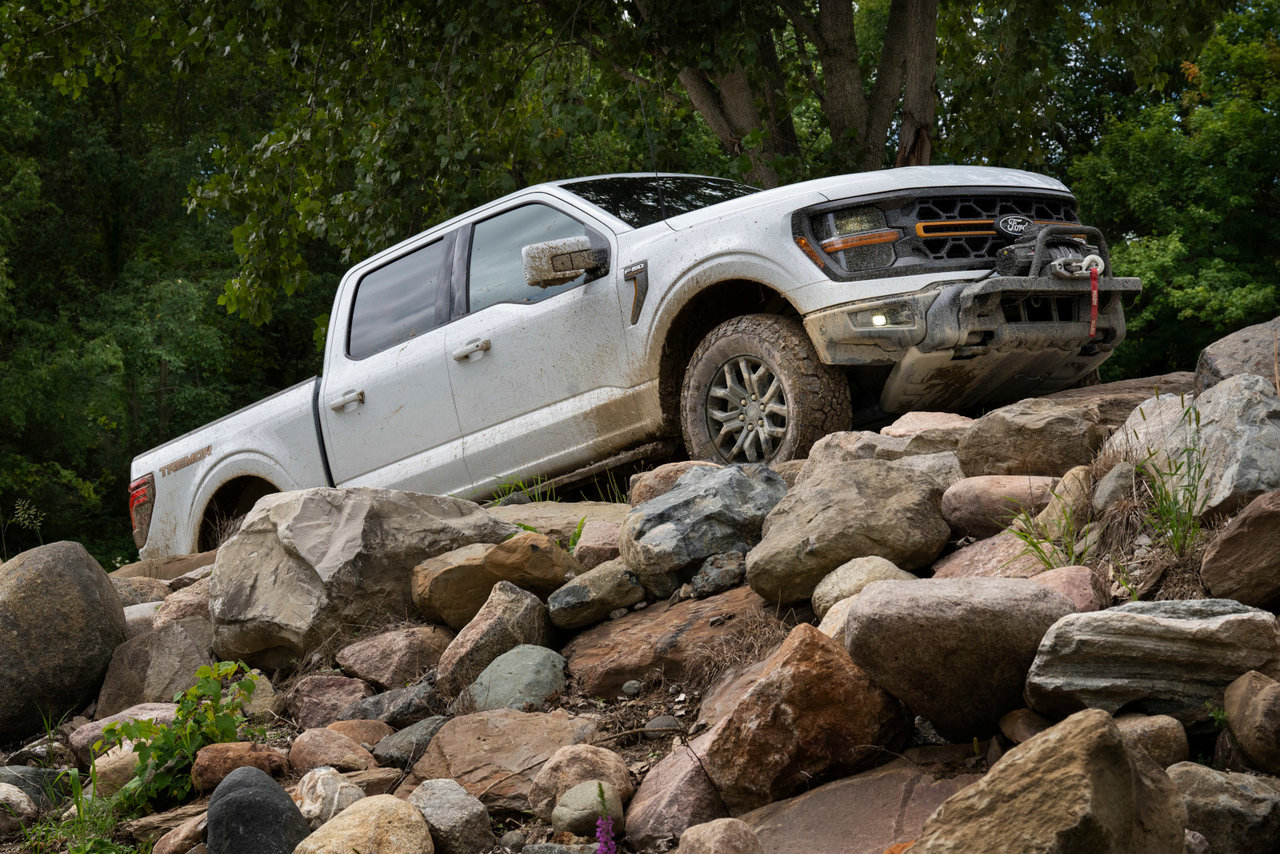
The Tremor’s off-road-tuned suspension raises ground clearance to 240 mm while keeping the ride absorbent enough for daily use. It pairs steel skid plates, large all-terrain tires, and up to eight selectable drive modes, including Mud/Rut and Rock Crawl, with an available modular front bumper.
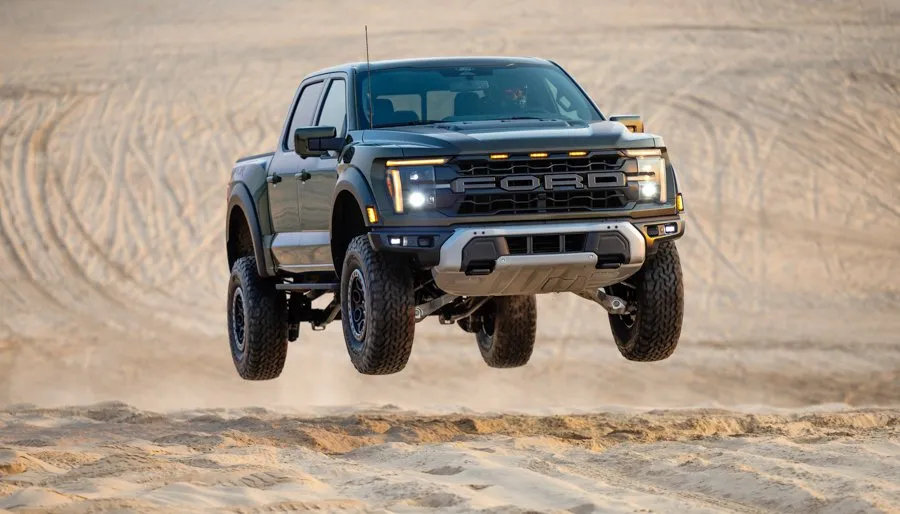
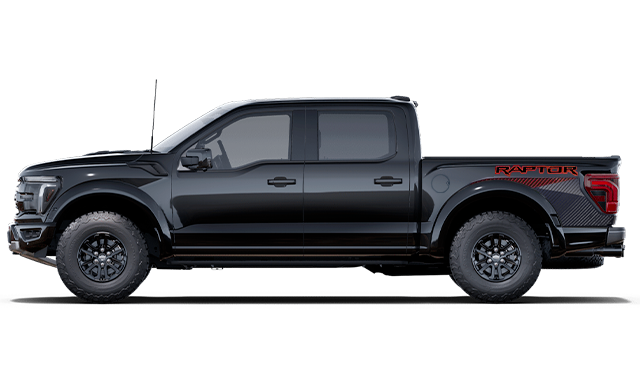
The Raptor pushes further with FOX Racing Dual-Valve shocks and a 306 mm ground clearance figure that’s built-in-class among Ford’s off-road trucks. Its approach angle of 31.0 degrees, well ahead of the Tremor’s 27.6 degrees, means it clears steeper obstacle faces without contact.
That capability comes with a size cost. The Raptor’s front and rear track are wider than the Tremor’s, and its width without mirrors reaches 2,200 mm against the Tremor’s 2,030 mm. On a tight forestry road or a rutted access route, the Tremor’s narrower footprint is easier to place, while the Raptor is at its best where the trail opens up and speed matters more than precision.
The Tremor actually edges the Raptor on departure angle, 24.3 degrees versus 23.9 degrees, so exiting a steep pull-out favours the Tremor by a small but real margin. Combined with its lower stance, the Tremor reads as the trim built for tighter, technical routes rather than wide-open high-speed terrain.
Powertrain, Fuel, and Towing
The Tremor’s 3.5L EcoBoost V6 makes 400 horsepower and 500 lb-ft of torque on regular unleaded fuel, a straightforward pairing for owners who tow trailers, haul gear, or commute daily. Its 13.3 L/100km combined rating keeps running costs down compared with a bigger, thirstier engine.
The Raptor’s High-Output 3.5L EcoBoost V6 adds 50 horsepower and 10 lb-ft of torque, but it requires premium unleaded and returns 15.8 L/100km combined. That’s a real fuel-cost gap over a year of mixed highway and trail driving, and it lands squarely with the Raptor’s more specialized mission.
Towing tells a similar story. The Tremor’s rated 10,600 lbs (4,808 kg) beats the Raptor’s 8,200 lbs (3,719 kg) by a wide margin, a meaningful gap for anyone pulling a boat, camper, or utility trailer along with weekend gear. The Raptor’s suspension and stance are engineered for terrain speed, not maximum trailer weight, so this is where the two trims genuinely split.
Cabin Space and Everyday Driving
Both trims share the SuperCrew cab’s interior dimensions, with 1,115 mm of legroom, 1,037 mm of headroom, and 1,695 mm of shoulder room up front. That space carries over regardless of trim, so neither one asks a family to give up cabin comfort for off-road hardware.
Where the two separate is how they feel getting there. The Tremor’s tighter width and lower stance make it easier to place in traffic, on a two-lane mountain road, or backing up to a trailer. The Raptor’s wider body and taller ride height reward confidence at speed but ask for more room to manoeuvre on narrower routes.
Why the F-150 Tremor Fits British Columbia Drivers
For a truck that has to do highway commuting, trailer towing, and the occasional rutted access road in the same week, the Tremor is built around exactly that mix. Its 10,600 lb (4,808 kg) tow rating, regular-fuel engine, and 13.3 L/100km combined economy add up to a truck that doesn’t punish everyday use in exchange for trail capability.
It still brings genuine off-road hardware: selectable drive modes, skid plates, all-terrain tires, and a departure angle that edges out the Raptor. For British Columbia’s mix of highway stretches, gravel routes, and weekend backcountry trips, that combination of everyday manners and trail-ready hardware is the more complete answer.
Get Behind the Wheel of the F-150 Tremor
The 2026 F-150 Tremor pairs a torque-rich EcoBoost V6, a 10,600 lb (4,808 kg) tow rating, and trail-tuned suspension hardware in a package sized for everyday roads. It’s a truck built to handle both the commute and the trailhead without a compromise on either.
Visit Coastal Ford Burnaby in Burnaby to see the F-150 Tremor in person and plan a test drive covering city streets, highway stretches, and a gravel or forestry-service route close to home.